
Introduction — why multi-agent matters today
The era of single, monolithic AI systems is giving way to a more modular, collaborative approach: multi-agent AI. Rather than one model trying to do everything, multi-agent systems coordinate many specialized agents—each with a role, capability set, and way of interacting—to solve complex, real-world problems more reliably and efficiently. This shift matters for product teams, researchers, and executives because multi-agent architectures can unlock parallelism, specialization, and emergent problem-solving that single-agent systems struggle to deliver.
In this long-form guide you’ll get:
A clear, operational definition of multi-agent systems (MAS).
Why and when to choose a multi-agent design.
Core architectures and patterns (communication, coordination, hierarchy).
Real-world use cases and business wins.
Technical challenges, security & governance issues.
A step-by-step blueprint to build your first multi-agent project.
SEO-ready FAQs and an implementation checklist you can use immediately.
What is a multi-agent AI system?
At its simplest, a multi-agent system is a collection of autonomous computational entities—agents—that perceive an environment, take actions, and interact (cooperatively or competitively) to achieve individual or shared goals. Each agent can be specialized: a retrieval agent, a planner, a reasoning agent, a tool-executor, or a domain expert. When orchestrated correctly, these agents form a distributed intelligence that is more resilient, scalable, and adaptable than a single agent.
Important components you’ll see again and again:
Agent profile — capabilities, memory, API access, constraints.
Perception — how agents sense environment state (APIs, databases, user input).
Communication protocol — message-passing rules, shared knowledge stores, or a central broker.
Coordination & task allocation — how tasks are split, routed, and reconciled across agents.
Why choose multi-agent? Benefits that matter
Specialization and modularity. Agents can be built and improved independently: one agent handles data retrieval, another handles evaluation, another executes actions. This modularity reduces complexity and accelerates iteration.
Parallelism and speed. Multiple agents can run in parallel, processing different subtasks and reducing end-to-end latency for complex workflows.
Robustness and fault tolerance. If one agent fails or hallucinate, other agents (or a supervisor agent) can detect and correct errors, improving reliability.
Emergent capabilities. When agents debate, critique, and build on each other’s outputs, the system can exhibit higher-order reasoning than each agent alone. Several surveys and experiments show promising synergy when agents collaborate under well-designed protocols.
Interoperability in enterprise stacks. Multi-agent orchestration lets you compose services from different vendors (LLMs, retrieval systems, analytics), enabling pragmatic integration with existing tooling. Recent industry platforms explicitly target connecting heterogeneous agents.
When not to use a multi-agent approach
Simple tasks (single-step Q&A, basic classification) — extra coordination overhead is unnecessary.
Tight latency constraints where networked coordination will add unacceptable overhead.
High-governance environments where auditability and deterministic outputs are mandatory unless you have rigorous monitoring and explainability.
Common multi-agent architectures & patterns
Centralized broker (hub-and-spoke): A coordinator routes tasks to agents and aggregates results. Good for controlled orchestration and logging, but can be a bottleneck.
Decentralized peer-to-peer: Agents communicate directly using pub/sub, shared memory, or message queues. This scales better and reduces single points of failure, but coordination is harder.
Hierarchical (manager/worker): A planner or manager agent breaks down objectives and supervises worker agents. Useful when tasks naturally decompose into layers (planning → execution → verification).
Market-based or game-theoretic: Agents negotiate resources or tasks via bidding/utility functions. This works for resource allocation problems and simulated economics.
Hybrid patterns: Many practical systems mix these: a central task router for authoring, decentralized agent collaboration for execution, and a supervisor agent for safety checks.
Real-world multi-agent use cases that deliver ROI
Enterprise automation and workflows. Finance, HR, and marketing workflows that require data retrieval, policy checking, document generation, and execution benefit from specialized agents (retriever, policy-checker, composer, executor). Consulting firms are building platforms to connect these agents across vendors.
Security operations (SOC). Multi-agent pipelines can triage alerts, enrich context, propose remediation, and simulate attacker behavior; but they must be designed carefully to avoid introducing new attack surfaces.
Research & decision support. Teams run debate-style agents (pro/con) to surface multiple perspectives on complex decisions, improving transparency and reducing single-model bias.
Robotics & autonomous systems. Physical robots often decompose perception, planning, and control into agent-like modules that coordinate for robust navigation and manipulation.
Simulations & training environments. Multi-agent simulations model markets, traffic, or social behavior where each actor is an agent with its own objectives.
Technical challenges & pitfalls (what keeps engineers up at night)
Coordination complexity. Task allocation, deadlocks, and inconsistent state across agents are hard problems—especially in decentralized setups. Use proven coordination protocols and careful simulation before production.
Hallucinations and trust. Agents built on LLMs can produce confident but incorrect outputs. Multi-agent systems must include verification agents, human-in-the-loop gates, or fact-checking components.
Security & misuse. Agents with action capabilities (APIs, integration with infra) become attractive attack vectors. Treat agents as privileged services: authentication, least privilege, input sanitization, and auditing are mandatory.
State & memory management. Deciding what memory is local vs shared, and how it’s updated and purged, impacts performance, privacy, and correctness.
Monitoring & observability. Traditional metrics (latency, error rate) are insufficient. Track provenance, agent-level confidence, disagreement rates, and downstream impact.
Inter-agent standardization. Without shared schemas for messages, profiles, and error types, agent ecosystems become brittle. Industry is moving toward agent “OS” patterns to standardize interop.
Practical blueprint: how to build your first multi-agent project
Below is a step-by-step, practical blueprint you can follow this quarter.
1) Start with a clear, narrowly scoped objective
Pick one business workflow that benefits from decomposition—e.g., “automate first-line invoice triage and filing.” Define success metrics (time saved, accuracy, human escalations avoided).
2) Design agent roles and boundaries
Define 4–6 agents max for an MVP:
Ingest agent: fetches invoice PDFs and metadata.
Extractor agent: converts PDF → structured data (OCR + NER).
Validator agent: checks amounts, tax rules, vendor whitelists.
Composer agent: prepares accounting entries or emails.
Supervisor agent: single-source-of-truth that accepts/rejects final actions for audit.
Map inputs/outputs clearly and define contract interfaces (JSON schemas, timeouts).
3) Choose orchestration & comms
For an MVP, a centralized broker + message queue (e.g., RabbitMQ or managed pub/sub) keeps things simple and observable. Document the message schema and retries.
4) Build verification and safety layers
Add cross-agent verification: e.g., extractor outputs must pass validator checks; if they disagree, route to a human-review queue. Log provenance for every decision.
5) Implement progressive rollout and monitoring
Start with a shadow mode (agents run, but humans make final decisions). Track agent disagreement rates, task routing latency, and error patterns. Build dashboards for agent-level KPIs.
6) Iterate: refine agents or split/merge roles
If an agent is doing too many jobs, split it. If two agents always agree and add latency, consider merging. Use A/B tests to validate changes.
Governance, compliance & security checklist
Authentication & least privilege for agent actions (API keys per agent).
End-to-end audit logs with immutable provenance.
Human-in-the-loop for high-risk decisions.
Input/output sanitization and content filters.
Regular red-team exercises for agent chains.
Data retention policy for agent memories (GDPR considerations).
Tooling & ecosystem: what to evaluate
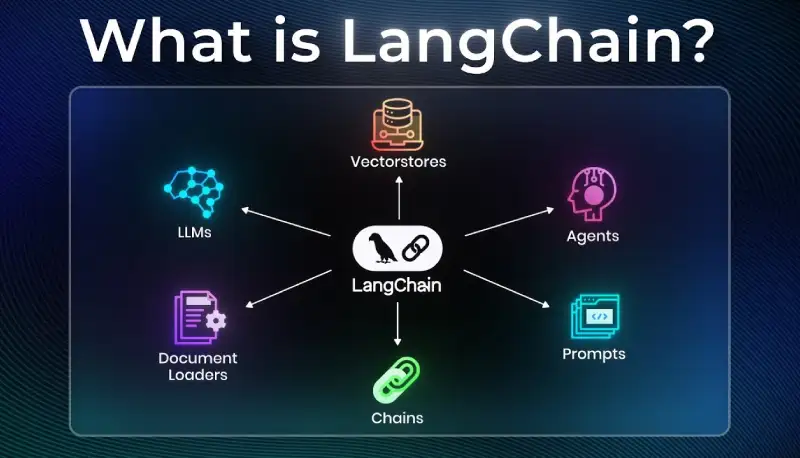
Platforms and libraries for building multi-agent systems range from lightweight orchestration stacks (message queues, serverless functions) to agent frameworks (open-source MetaGPT/Meta’s projects, LangChain-style orchestration, commercial “agent OS” offerings from consultancies). Choose based on scale, vendor lock-in tolerance, and security needs.
FAQ — for AI Agents
Q: What is a multi-agent system?
A: A multi-agent system (MAS) is a distributed collection of autonomous agents that interact and coordinate to perform tasks that are beyond the capabilities of any single agent.
Q: How is multi-agent different from agentic AI or single-agent LLMs?
A: Single-agent LLMs focus on one model doing end-to-end work. Agentic AI is a broader idea of autonomous agents that take actions; multi-agent specifically emphasizes multiple cooperating/competing agents with defined roles. Recent literature distinguishes these terms and maps their use cases.
Q: Are multi-agent systems safe?
A: They can be—but only if built with layered verification, least-privilege action controls, human oversight for risky decisions, and thorough monitoring. Security is one of the leading practical challenges today.
Q: Where should I start as a product owner?
A: Start with a narrowly scoped workflow, run agents in shadow mode, add supervisor/verification agents early, and instrument observability for agent disagreement and downstream impact.
